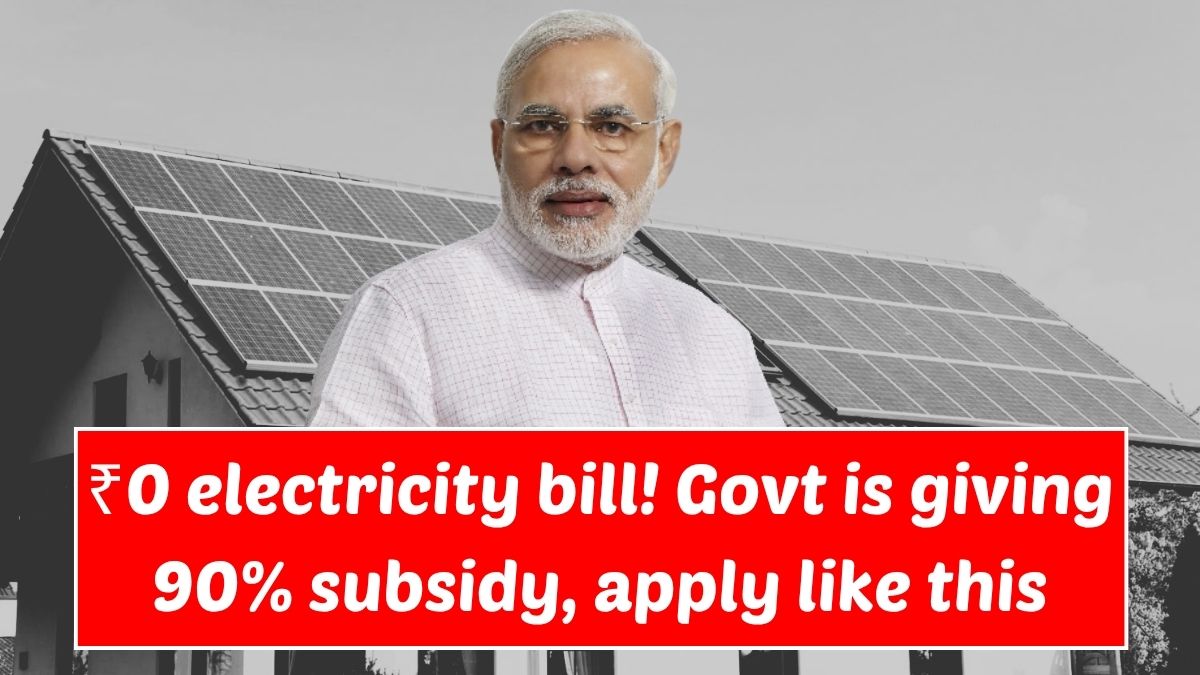
Electricity bills are a major expense for many families in India. From rural areas to cities, a large part of household income goes toward paying monthly power bills. With rising costs, this burden is becoming heavier. To provide a long-term solution, the Government of India has introduced the Free Solar Panel Yojana 2026. This scheme allows households to install solar panels on their rooftops and generate their own electricity, helping reduce or even eliminate electricity bills.
The main goal of this scheme is to promote the use of solar energy and reduce dependence on traditional electricity sources. By encouraging people to generate their own power, the government aims to make the country more energy-independent. Solar energy is clean and eco-friendly, which also helps in protecting the environment. This initiative is an important step toward a greener and more sustainable future.
Who Can Apply for the Scheme?
The scheme is open to most Indian citizens, but certain conditions must be met. The applicant should own a house with enough rooftop space to install solar panels. A valid electricity connection is also necessary, as it is required for net metering. Additionally, the applicant should not already be benefiting from another government solar scheme. Any household meeting these simple requirements can apply and take advantage of the subsidy.

Subsidy Benefits and Cost Savings
Under this scheme, the government provides subsidies based on the capacity of the solar system. For systems between 1 kW and 3 kW, a subsidy of up to 40% is available. In some special categories, this subsidy may go up to 60% or even more. This reduces the initial installation cost significantly, making solar energy affordable for common households. Once installed, solar panels can generate electricity for many years with minimal maintenance, providing long-term financial savings.
How Net Metering Works
Net metering is a key feature of this scheme. Solar panels generate electricity during the day, which is used directly in the home. If more electricity is produced than needed, the extra power is sent to the government grid. In return, the household receives credits on their electricity bill. Over time, these credits can reduce the bill to zero. This is how many families are able to enjoy free electricity after installing solar panels.
Application Process and Required Documents
To apply for the scheme, applicants need basic documents such as an Aadhaar card, electricity bill, bank account details, mobile number, and a passport-size photo. The application process is simple and fully online. Applicants must register on the official portal National Portal for Rooftop Solar. After filling out the form and uploading documents, the application is reviewed by authorities. If approved, the installation process begins. The system is transparent and designed to be user-friendly.

Future of Solar Energy in India
Solar energy is expected to play a major role in India’s future. Traditional energy sources are limited and becoming more expensive, while solar power is renewable and cost-effective. The government is continuously promoting green energy through various policies and schemes. Installing solar panels today is not just a way to save money but also a smart long-term investment.
The Free Solar Panel Yojana 2026 is a beneficial initiative for households looking to reduce their electricity expenses. With high subsidies, easy application, and long-term savings, this scheme offers both financial and environmental benefits. Families who adopt solar energy now can enjoy free electricity for the next 20–25 years. It is a practical and forward-thinking step toward a better future.